 GetPaid
Late Payment Statistics: What Government Data Shows (2026)
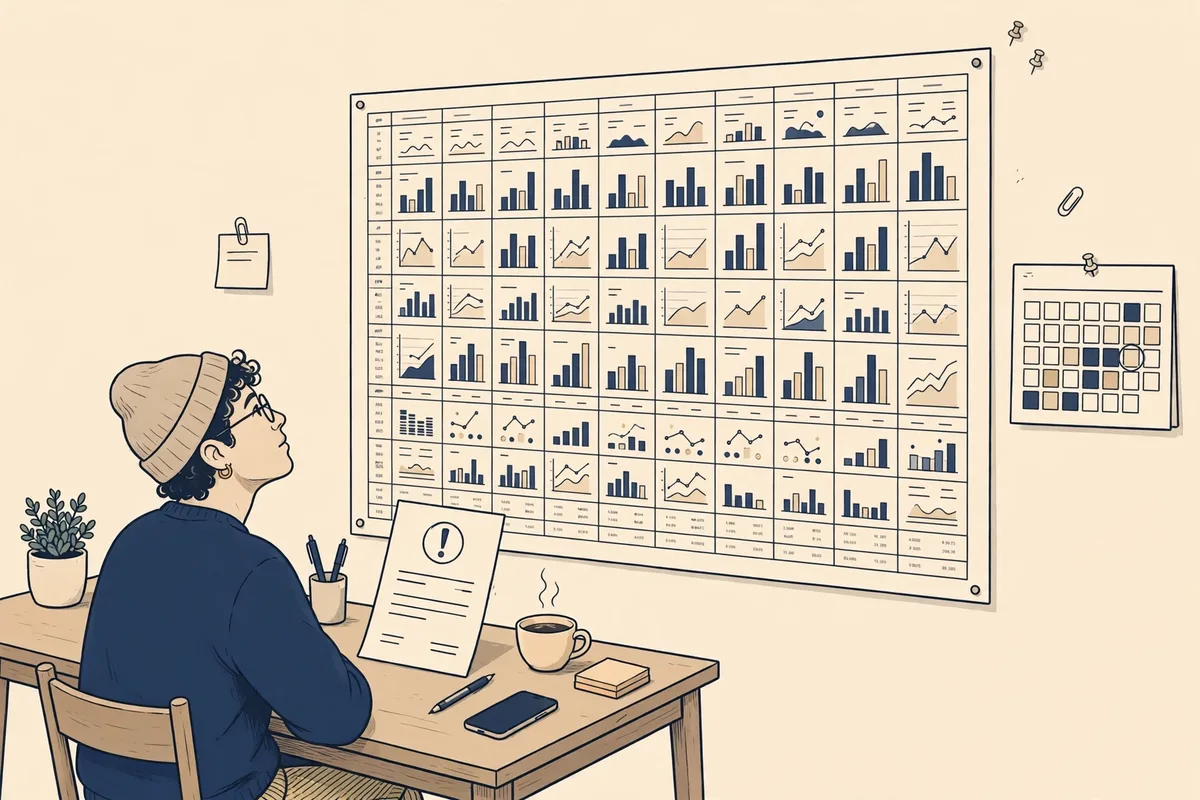
Your unpaid invoice is in a government spreadsheet
Somewhere in an official spreadsheet in London, Washington or Canberra, there is a row that includes your unpaid invoice. Not your name — just the wait. Governments have started counting late payment the way they count unemployment, and what they publish describes, almost exactly, the month you have just had.
This page collects those official numbers: the UK government's late payment research, the Federal Reserve's Small Business Credit Survey, and Australia's Payment Times Reporting data, which large companies are legally required to file. No vendor surveys and no software marketing. Every figure is named where it appears, and the full sources are listed at the end, so you can check each line — and cite it — yourself.
The short version
- 28% of UK businesses — over 1.5 million of them — are affected by late payments each year. (UK Department for Business and Trade / Small Business Commissioner research, 2025)
- Roughly 4 in 5 US small firms face challenges related to customer payments. (Federal Reserve Banks, 2024 Report on Payments)
- Only 68.5% of invoices from large Australian companies to small suppliers were paid within the agreed terms. (Payment Times Reporting Regulator, 2026)
- The average agreed term was 29 days — but getting 95% of invoices paid took 55 days. (Payment Times Reporting Regulator, 2026)
- UK businesses are owed an estimated £26 billion in late payments at any given time — about £17,000 per affected business. (UK government research, 2025)
- Late payment closes an estimated 14,000 UK businesses a year — 38 a day. (UK government research, 2025)
How common is late payment?
Start with the UK, because the British government has done the most thorough counting. Research commissioned by the Department for Business and Trade and the Office of the Small Business Commissioner, published in July 2025, estimates that over 1.5 million UK businesses — 28% of all businesses — are affected by late payments each year. Not "have been, once." Each year.
In the United States, the Federal Reserve Banks ask small firms about payments directly. Their 2024 Report on Payments, based on the 2023 Small Business Credit Survey — 4,920 employer firms answered the payments questions — found that roughly four of every five small firms face challenges related to customer payments. Processing fees are the most common complaint overall, but for firms that invoice after delivery, the defining challenge is slow-paying customers. The Fed notes that professional services and real estate firms — the category most freelancers work in — are among the most likely to report slow-paying customers as a challenge.
The Fed's newer survey rounds show the strain from the other side. In the 2026 Report on Employer Firms, based on the 2025 survey, 50% of employer firms reported uneven cash flow as a financial challenge — and the Fed's own footnote specifies that "uneven cash flow" includes collecting on receivables. Money that has been earned and invoiced but has not arrived is, officially, half of the small-business cash-flow problem.
Australia measures the receiving end directly. Under the Payment Times Reporting Scheme, large businesses must report how they pay small suppliers. In the second half of 2025, across 3,254 reporting entities, just 68.5% of small business invoices were paid within the agreed payment terms. Turn it around: nearly one invoice in three was paid outside the terms the client itself had agreed to.
How late is late?
Australia's register is the clearest window anywhere into the gap between the promise and the payment, because it records both.
The average common payment term large Australian businesses offered small suppliers in the second half of 2025 was 29 days. The median invoice was paid in 22 days and the average in 27.2 days — inside the term, on paper. But averages hide the tail, and the tail is where freelancers live. It took 37 days to pay 80% of small business invoices, and 55 days to pay 95% of them. In the Regulator's own words, it is taking almost double the average agreed payment term for the vast majority of small business invoices to be paid. And 5.9% of invoices were paid more than 60 days after they were issued.
The pattern holds at company level, too: 84% of reporting entities — 2,720 of 3,254 — took more than 30 days to pay 95% of their small business invoices. A slow tail is not a few bad apples. It is the standard operating procedure of most large buyers.
If you sell professional services, your row of the table is worse. Australian professional, scientific and technical services suppliers were offered average terms of 27 days, waited an average of 39.1 days to be paid, and saw 95% of invoices settled only at 64 days.
Meanwhile, in the UK, the stock of unpaid money is enormous: businesses are owed an estimated £26 billion in late payments at any given time, an average of £17,000 for each affected business. That is money already earned, sitting in someone else's bank account, working as free finance for the client who has not paid you.
What late payment costs
The UK research priced the damage. Late payments are estimated to cost the UK economy almost £11 billion a year. An estimated 14,000 businesses close each year as a result — 38 businesses every day, closed not because the work was not there, but because the money for work already done arrived too late, or not at all.
Then there is the tax nobody invoices for: time. In the UK survey, 22% of businesses said they spent staff time chasing late payments, and affected businesses burned an average of 86 hours a year doing it — 133 million hours across the economy, spent asking for money that was already owed. If you are a one-person business, those hours come out of the same day as everything else.
And late payment reproduces. In the Federal Reserve's 2025 survey, 54% of employer firms said they had difficulty paying operating expenses. Among firms facing financial challenges, 54% covered the gap with the owner's personal funds, and 24% made a late payment of their own, or did not pay at all. Read that chain slowly: your client's late payment becomes your late payment. The delay you absorb today is the delay someone else absorbs from you next month — unless you are the one who stops it with personal savings.
The UK data shows businesses learning the defensive lesson: 15% of surveyed businesses said they have avoided doing business with specific customers because of how those customers pay. Refusing work feels expensive. The official numbers suggest it is often the cheaper option.
Payment terms: the paper promise vs. the record
Three governments' data point at the same gap: the term on the contract is not the term in real life.
Australia's average term is 29 days — reasonable on paper — while the point at which 95% of invoices are finally paid sits at 55 days. The problem is not mainly what is written. It is what happens next. There is one encouraging line in the register: since mandatory reporting began in 2021, the share of invoices paid within 30 days has risen from 63.2% to 69.8%, and the share paid after 60 days has fallen from 8.6% to 5.9%. Being measured, in public, moved the numbers.
The UK is going further. In its 2026 consultation response, the government set out plans to legislate maximum payment terms of 60 days and a statutory right to interest on late payments at 8% above the Bank of England base rate, alongside new fining powers for the Small Business Commissioner. Whether or not the law passes in exactly that form, the direction is unmistakable: late payment is being reclassified from a private awkwardness into regulated behaviour.
In the US, the Fed's data shows how exposed the default arrangement is. Only 38% of firms collect payment at the time of service or purchase — the single most common arrangement, and still a minority. Everyone else delivers first and bills later, which means most small businesses are in the lending business whether they applied to be or not. The ones who get hurt least are the ones who set the terms of that loan on purpose.
What the numbers say to do
You cannot wait for legislation, and you do not have to. Every dataset on this page points at the same three defences, and all three are paperwork, not personality.
First, set the term before the work starts — a short, dated deadline, a deposit, and a late fee, agreed while everyone is still friendly. That is the whole subject of How to Get Clients to Pay on Time: 7 Payment Terms That Actually Work.
Second, when the date passes, chase on a schedule instead of on hope. A reminder sent the day an invoice falls due is administration; the same email sent three weeks later, after the rent is due, is a plea. Use words that are already written: Late Payment Reminder Emails: Templates for Every Stage.
Third, check the client before you sign. In Australia, a large client's reported payment times sit on the public Payment Times Reports Register, free to search before you agree to anything. Everywhere else the checks are simpler, but the principle is the same — it is set out step by step in How to Vet a New Client Before You Start Work. The 15% of UK businesses who walked away from bad payers are not being picky. They read the same statistics you just did.

Steal the exact words
Free sample: 3 late-payment email templates + the invoice checklist that gets invoices paid right the first time.
Want the whole system — all 12 templates, the contract clauses, late fee wording, and deposit scripts? That's The Get Paid Pack.
FAQ
How many businesses are affected by late payment? In the UK government's 2025 research, over 1.5 million businesses — 28% of all businesses — are affected by late payments each year. In the US, the Federal Reserve's 2024 Report on Payments found that roughly four of every five small firms face challenges related to customer payments.
How long do large companies actually take to pay small suppliers? Australia's Payment Times Reporting data for July to December 2025 puts the median at 22 days and the average at 27.2 days, against average agreed terms of 29 days. But 95% of invoices took 55 days to be paid, and 5.9% took more than 60 days.
What does late payment cost? The UK government estimates that late payments cost the UK economy almost £11 billion a year, close an estimated 14,000 businesses a year, and consume an average of 86 hours a year per affected business in chasing time. UK businesses are owed an estimated £26 billion in late payments at any given time.
Are payment times getting better or worse? In Australia, slowly better since reporting became mandatory: invoices paid within 30 days rose from 63.2% in the first half of 2021 to 69.8% in the second half of 2025, and the point at which 95% of invoices were paid improved from 62 days to 55 days between the first and second halves of 2025. The gap between agreed terms and actual payment is still close to double at the slow end.
Sources
Every figure on this page comes from one of the publications below, opened and checked against the original text.
- UK Department for Business and Trade, "Late payment consultation: time to pay up – government response" (GOV.UK, 2026)
- Office of the Small Business Commissioner, "Late Payments Research" — research by London Economics for the Department for Business and Trade, published 31 July 2025
- Federal Reserve Banks, "2024 Report on Payments: Findings from the 2023 Small Business Credit Survey"
- Federal Reserve Banks, "2026 Report on Employer Firms: Findings from the 2025 Small Business Credit Survey" (March 2026)
- Payment Times Reporting Regulator (Australian Government), "Regulator's Update – August 2026", Reporting Cycle 10, 1 July to 31 December 2025 (PDF)
Steal the exact words
Free sample: 3 late-payment email templates + the invoice checklist that gets invoices paid right the first time.
Want the whole system — all 12 templates, the contract clauses, late fee wording, and deposit scripts? That's The Get Paid Pack.
Read next

Unpaid Invoices at Year-End: How to Collect Before December 31
Still owed money as the year ends? A week-by-week plan to collect before December 31, with three copy-paste reminder emails.

How to Get Paid Upfront: Deposits, Milestones, and Retainers
Deposits, milestones, and retainers compared — pick the upfront structure that fits the shape of your work.
Should You Offer an Early Payment Discount? (2/10 Net 30, Explained)
A 2% discount sounds cheap. It costs about 37% a year — the math, when it is worth it, and what to do instead.