 GetPaid
What to Do When a Client Goes Silent (Ghosting)
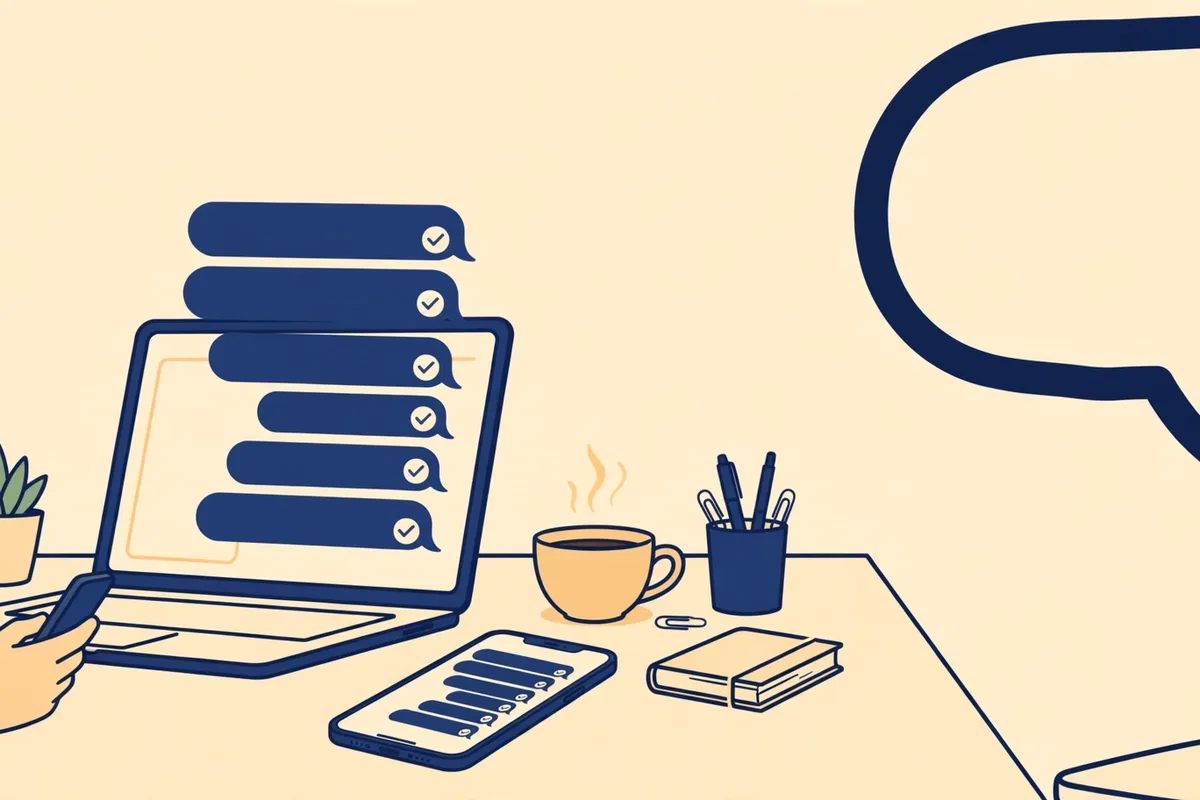
Silence is not a "no". It is an unpaid invoice with no deadline.
A client who argues about an invoice is, in a strange way, good news. They are talking. You know where they stand, you know what they object to, and you have something to work with. A client who stops replying gives you none of that. The invoice is out. The due date has passed. Your emails sit unanswered, your messages show as read, and every day that passes without a word makes the next email harder to send — because now you are not just asking for money, you are asking a person who has already ignored you to please, this time, pay attention.
That is the specific cruelty of ghosting: it turns a business problem into a personal one. You start wondering whether you did something wrong. Whether the work was bad. Whether the client is angry, or ill, or simply gone. And while you wonder, nothing moves. The invoice has no deadline anymore, because a deadline only works when the other side is in the conversation.
This article is a plan for that exact situation. Not a pep talk, and not a legal guide — the legal end of this, small claims and collection agencies, is a separate question for another article. This is the practical middle: how to tell the three kinds of silence apart, what to send on day 3, day 7, day 14 and day 30, when to change channels, what never to write, and how to decide, cleanly, when to stop chasing and move on.
The three kinds of silence
Before you write anything, it helps to know what you are probably dealing with. Silence is not one thing. It is three different situations that look identical from your inbox, and they need different handling.
The busy client. The work is real, the money exists, and the person who approves your invoice is buried — on leave, in a launch, in the middle of a reorganization. Your emails are not being ignored so much as drowned. This is the most common kind of silence, and also the most fixable, because the client is not avoiding you; they simply have not seen you. The tell: the client was responsive and normal until a specific moment, and the silence started at a plausible point — a holiday, a product launch, a company event. Your messages are still being opened, or at least not obviously refused.
The client in trouble. The business is short of cash, a big customer of theirs has not paid them, or the project itself has stalled and nobody wants to admit it. This client reads your emails and feels worse with each one. They are not ignoring you out of contempt; they are ignoring you because every reply would have to contain news they do not have. The tell: the silence started gradually — replies got shorter, then slower, then stopped — and it followed a moment of strain, like a delayed milestone or a budget conversation that went quiet.
The client who is gone. This is the one you fear, and it is real, but it is rarer than the other two. The client has decided not to pay, or the person you dealt with has left and nobody inherited your invoice, or the business itself has folded. The tell: the silence is total and sudden — no out-of-office, no read receipt, no response to a different channel — and it survives a change of approach. You will not know which kind you have until you test it, which is exactly what the timeline below does.
One thing the three kinds share: your first job is not to write a cleverer email. It is to check the plumbing. More ghostings than anyone admits turn out to be a wrong address, a spam filter, or an invoice the client literally cannot open. Check that before you spend a week writing follow-ups to a mailbox nobody reads.
Before the first follow-up: the plumbing check
Do this before day 3, in ten minutes, and do not skip it because it feels too simple.
Did the invoice actually arrive? Send it to yourself first and open it the way a client would. Does the attachment open? Is the total on the first page, not buried on page three? Is the due date written as a date — "Due November 15" — rather than "Net 30", which half your clients will read as a suggestion? Is the payment link or the bank details correct? If you have never tested your own invoice by opening it cold, now is the time.
Are you writing to the right person? The person who approved the work is not always the person who pays for it. If your contact is a project manager, the invoice may need to go to accounts payable, finance, or an owner — and your contact may have forwarded it badly, or not at all. Ask, in your first follow-up, who approves invoices and who releases payment. That question is useful even when the silence is innocent, because it tells you where the money actually sits.
Is your subject line doing the work? A subject that says "Invoice #1042" is easy to file and forget. A subject that says "Invoice #1042 — $2,400 due November 15" can be acted on without opening the email. The subject lines that get opened, by escalation stage, are covered in Late Payment Email Subject Lines That Get Opened — borrow one rather than inventing one under stress.
If the plumbing is fine, start the clock. The timeline below is the whole plan. Each step is short on purpose: the shorter the message, the fewer reasons the client has to put off answering it.
Day 3: the nudge
Three days after the due date, or three days after your last message if the invoice was not yet due when the silence started. Short, warm, and — this matters — written as if nothing is wrong. You are not accusing anyone. You are checking in.
Subject: Quick check — invoice #1042 ($2,400, due Nov 15)
Hi [Name],
Just checking in on invoice #1042 for $2,400, due November 15. Let me know if anything is missing on your side — happy to resend it or adjust the details.
Thanks, [Your name]
Three things this does. It restates the amount and the date, so the client does not have to open anything to know what you mean. It offers an easy excuse — "anything missing" — which gives a busy or embarrassed client a door to walk through. And it asks for nothing more than a reply, which is a much smaller ask than payment. A client who is merely busy will often answer this one, because answering is finally easier than continuing to ignore you.
If they answer and pay, you are done. If they answer with a date, write the date down, send one line back — "Thanks, I'll expect it on the 20th" — and then wait for the 20th, not for a feeling. If they do not answer, do not send the same email again. Move to day 7.
Day 7: the restatement
One week. The tone changes slightly — still polite, still short, but now the message has a spine. You restate the facts, you name a new date, and you attach the invoice again, because "I never got it" is still on the table and you want to remove it.
Subject: Following up — invoice #1042 ($2,400, now 7 days past due)
Hi [Name],
Following up on invoice #1042 for $2,400, due November 15 — now a week past due. I've attached it again here for convenience.
Could you let me know when I can expect payment? If there's a process on your side I should follow — a portal, a purchase order number, a different contact — please point me to it.
Thanks, [Your name]
The new move here is the process question. Busy clients and troubled clients both respond to this, for different reasons: the busy one can hand you to the right person, and the troubled one can tell you the truth about the delay without having to say "we don't have the money" in so many words. Either answer is progress. Silence at this stage starts to narrow the possibilities — you are probably not dealing with a client who simply missed one email.
Between day 7 and day 14, do one quiet thing: check whether the client is still operating. Their website, their social accounts, a recent post, a colleague you know in common. You are not investigating them; you are checking whether the business still exists and whether your contact is still there. If the company has plainly folded or your contact has left, the rest of this plan changes — you are looking for whoever inherited the obligation, not for a reply from a person who no longer works there.
Day 14: the channel switch
Two weeks. Email has had its chance. Now you change the channel, because a new channel is not a repeat — it is a new message the client has to notice.
Call, if you have a number. Not to argue. A call has one purpose: to hear a human voice and learn which kind of silence this is. Thirty seconds is enough: "Hi, it's [name] — I'm calling about invoice #1042, $2,400, due November 15. Can you tell me where it stands?" Then listen. A busy client will apologize and give you a date. A troubled client will hesitate, and the hesitation is itself the answer. A client who will not take the call at all, after two attempts on different days, has told you something too.
If there is no number, use the other channel the client actually lives on — the messaging app you used during the project, a LinkedIn message, the platform where you were hired. Keep it to two sentences, and keep the invoice number and the amount in it. The point of switching channels is not to corner the client; it is to reach the version of them that checks that inbox.
Send the same message in writing, once, on the new channel and by email. Whatever was said on the call goes into an email the same day: "As discussed, payment of $2,400 for invoice #1042 is expected by November 28." This is not bureaucracy. It is the record you will need if this ends in a formal step, and it is also a kindness to a busy client — they now have the commitment in writing, in their inbox, where they can forward it to finance.
If the client gives you a date, take it, confirm it in writing, and wait for it. If the date passes with no payment and no message, the timeline moves on — do not restart the clock because a promise was made. A promise that was broken is data, and the data says this client needs a consequence, not another reminder.
Day 30: the formal notice
Thirty days past due, and thirty days of silence, or of broken promises. The tone now is businesslike and final — not angry, not pleading, just clear. This is the last message before you stop chasing and start deciding, and the client should be able to tell that from the first line.
Subject: Final notice — invoice #1042 ($2,400, due Nov 15)
Hi [Name],
This is my final notice on invoice #1042 for $2,400, due November 15 — now 30 days past due. I have followed up on [dates] and have not received payment or a payment date.
Please arrange payment by [date, 7 days out], or let me know a date you can commit to. If I don't hear from you by then, I'll close this out on my side and take the next step available to me.
[Your name]
Two notes on this message. First, "the next step available to me" is deliberately unspecific. Do not threaten a specific legal action you have not decided to take — an empty threat, once ignored, teaches the client that your words have no weight. Second, this message only works if you mean it. The final notice is not a louder reminder. It is the last one. After it, you stop sending follow-ups, and you make the decision described in the next section. If you send a "final notice" and then send three more reminders, you have trained the client to ignore your finals.
The full set of reminder emails, from the friendly heads-up before the due date to the final notice, with the wording for each stage, is in What to Say When a Client Doesn't Pay: Late Payment Reminder Emails — use the sequence there rather than writing each message from scratch when you are already frustrated.
What never to write
Frustration is justified. It is also the fastest way to lose a payment that was still recoverable. A few lines that feel satisfying in the moment and cost you afterwards:
- The accusation. "You are ignoring me" or "You clearly have no intention of paying." Even if it is true, it gives the client a reason to stop reading and start defending themselves. It also reads badly to anyone else who later sees the thread — a finance manager, a lawyer, a judge.
- The public call-out. Posting about the client by name, or threatening to. It feels like leverage; in practice it hardens the client, poisons the relationship permanently, and can create legal problems of its own. Keep the dispute in private messages.
- The guilt essay. A long message about how much the delay has cost you, how you turned down other work, how stressed you are. It is all true, and none of it moves a client who is not paying. Worse, it hands a client in trouble the one thing they needed — proof that you will keep working and keep waiting while they sort themselves out.
- The discount in disguise. Offering to cut the price "just to close this out" in a moment of exhaustion. It teaches the client that silence is a negotiating tactic that works, and it will work again next time — on you, and on every freelancer they meet after you.
Short, dated, factual. Every message should be readable by a stranger in ten seconds and should contain the invoice number, the amount, and a date. If a message does not contain those three things, it is not a follow-up; it is a diary entry.
When to stop: the day-30 decision
At day 30, after the final notice, you make a decision — not a feeling, a decision — and you write it down. There are three real options, and "keep emailing" is not one of them.
Escalate. This is the path for invoices worth the effort: a formal demand letter, a collection agency, or small claims. Which one fits depends on the amount, the evidence you have, and where the client is — and the costs and the evidence checklist are a separate article, because they deserve their own space. Before you choose this, check that you have what an escalation needs: the contract or the written agreement, the invoice, the delivery proof, and the whole follow-up thread with dates. If any of that is missing, your first step is to assemble it, not to threaten.
Hand it to someone else and walk away from the chasing. A collection agency takes a cut, and that cut is the price of your time back. This is a reasonable choice for a mid-sized invoice where the amount matters but your hours matter more. The worst version of this option is the one freelancers choose most often: doing nothing, for months, while the invoice sits open and the resentment compounds.
Write it off. Sometimes the right answer is to close the invoice, record the loss, and stop spending time on a client who has already cost you more than the invoice is worth. Writing it off is not giving up; it is a business decision with a number attached. Work out the number honestly: the invoice amount, minus the hours you would spend chasing it, minus the other work those hours could have earned. If chasing costs more than the invoice, the chase is the loss, not the client. And if the client ever comes back — it happens more often than you would think, usually with a new project and no mention of the old one — you will be glad you kept the record, because the answer then is simple: the old invoice gets paid first, on your terms, before any new work starts. The cleanest way to end a relationship with a client who will not pay is covered in How to Fire a Client Who Always Pays Late.
Whichever option you choose, keep the record. The invoice, the contract, every follow-up with its date, every promise with its date, the final notice, and the decision you made and when. Store it where you will find it in a year. Two reasons: if the client resurfaces, you will know exactly what is owed and what was said; and if you ever escalate, the record is the case. Freelancers lose disputes less often on the facts than on the paperwork — the work was done, the payment was agreed, and nobody kept the thread.
Prevention: making the next silence shorter
Ghosting is not entirely preventable, and anyone who tells you otherwise is selling something. But it is shorten-able, and the cheapest place to shorten it is before the work starts. That is the whole subject of How to Vet a New Client Before You Start Work — the five red flags, the checks that take minutes, and the protections to insist on when you take a risky client anyway. Two of those protections matter most against silence specifically.
The pause-work clause. Your contract should say, in plain words, that if a payment is late, the work stops until it lands. This is the single most effective anti-ghosting device in a freelancer's toolkit, because it converts your problem into the client's problem: the project they need is now waiting on the payment they owe. The full set of clauses, with wording you can copy, is in 6 Payment Clauses Every Freelance Contract Needs.
Small, early milestones. Split the project so the first payment point comes early — after the first deliverable, not at the end. A client who goes silent after the first small milestone has cost you a week, not a month. A client who pays it on time has shown you, with evidence, that they are a busy client rather than a gone one. The general case, when a client stops paying at any stage rather than going silent specifically, is covered in What to Do When a Client Doesn't Pay.
And one habit that costs nothing: at the start of every project, get the name of a second contact — someone in accounts, or the client's own manager. A single point of contact is a single point of failure. When your only contact goes on leave, gets fired, or simply stops answering, a second name is the difference between a ghosting and a two-day delay.
The decision, in one paragraph
Silence is not a rejection; it is an unpaid invoice with no deadline, and your job is to give it one. Check the plumbing first, then follow the timeline: a nudge on day 3, a restatement with a new date on day 7, a different channel on day 14, and a final notice on day 30 — each message short, dated, and carrying the invoice number and the amount. Do not write the accusation, the public call-out, or the discount in disguise. At day 30, stop chasing and decide: escalate, hand it over, or write it off with the record kept. The freelancers who lose the least to ghosting are not the ones who write the fiercest emails. They are the ones who noticed the silence early, gave it a deadline, and stopped spending good weeks on a client who had already stopped answering.

Steal the exact words
Free sample: 3 late-payment email templates + the invoice checklist that gets invoices paid right the first time.
Want the whole system — all 12 templates, the contract clauses, late fee wording, and deposit scripts? That's The Get Paid Pack.
FAQ
The client replied, but only to say "I'll check with finance" — then went silent again. Does the clock restart? No. A vague reply is not a payment date. Reply once — "Thanks, could you confirm a date I can expect payment by?" — and if no date comes back, keep the original timeline running. Only a specific, dated commitment restarts the clock, and if that date passes unpaid, the timeline continues from where it was, not from the beginning.
Should I keep working while the client is silent? Not on unpaid work, no. If the silence is about an invoice for work already delivered, there is nothing to keep doing. If it is mid-project and the client has gone quiet, pause — and say so, briefly, in writing: "I'll hold on the next stage until invoice #1042 is settled." Working through silence is how a $2,400 problem becomes a $6,000 problem. The pause-work clause in your contract exists for exactly this moment.
What if the client is a big company and my contact just left? This is the most common "gone" that is not really gone. The company still owes you; the person who knew about it is simply not there anymore. Find the replacement — through the company's general contact, accounts payable, or the person who hired your contact — and send the invoice and the thread to them, once, with a short summary. Big-company silence is usually a system problem, and systems respond to a clear paper trail sent to the right desk.
I feel bad sending a "final notice" to a client I liked. Is it really necessary? It is kinder than the alternative, which is resenting them quietly for months while the invoice stays open. A final notice is not an attack; it is information. It tells the client, plainly, where things stand and what happens next, which is more respect than silence in either direction. Clients who intend to pay would rather get a final notice than discover, months later, that you wrote them off as a bad payer.
What if the amount is small — is it worth following this whole timeline? The timeline costs very little: four short messages over a month. For a small amount, follow it through day 14 and then decide — the formal steps after day 30 are where the cost-benefit question really bites, and for a small invoice the honest answer is usually to write it off, keep the record, and never work with that client again without payment up front. The prevention half of this article matters more for small invoices than the chase does.
Steal the exact words
Free sample: 3 late-payment email templates + the invoice checklist that gets invoices paid right the first time.
Want the whole system — all 12 templates, the contract clauses, late fee wording, and deposit scripts? That's The Get Paid Pack.
Read next
Small Claims and Collections for Freelancers: When It Is Worth It
The final notice failed. What a demand letter, a collection agency and small claims court actually involve — costs, evidence, deadlines, and when walking away is the smart move.

Unpaid Invoices at Year-End: How to Collect Before December 31
Still owed money as the year ends? A week-by-week plan to collect before December 31, with three copy-paste reminder emails.

How to Get Paid Upfront: Deposits, Milestones, and Retainers
Deposits, milestones, and retainers compared — pick the upfront structure that fits the shape of your work.